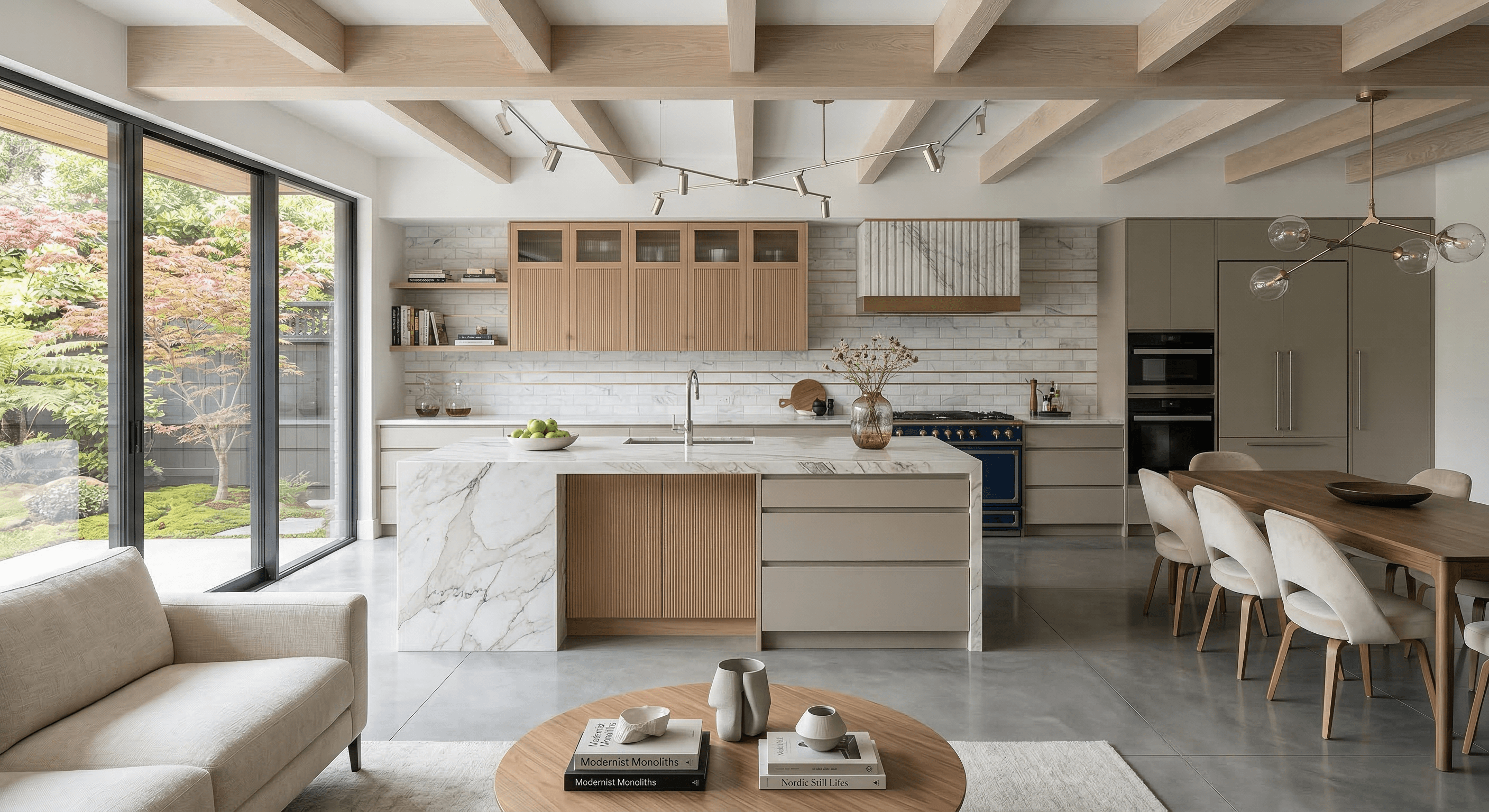
Introduction
Kitchen remodeling in California requires careful planning across design, permitting, budgeting, and contractor selection. Regulations, labor costs, and material standards vary significantly across regions, making early planning essential. ModulaTech helps homeowners simplify this process by combining design, materials, and professional connections into one platform.
Permitting & Code Considerations
California has some of the most comprehensive building and energy regulations in the U.S. Most kitchen remodels require permits when electrical, plumbing, or structural changes are involved.
Title 24 (California Energy Code)
Applies to lighting, appliances, and energy efficiency. Kitchens must use high-efficacy lighting (such as LED) and meet specific energy performance standards.
Electrical & Plumbing Updates
Upgrading circuits, outlets (GFCI/AFCI), and plumbing is often required in remodels, especially in older homes.
Ventilation Requirements
Range hoods must meet minimum airflow standards (commonly measured in CFM), depending on the appliance type.
Note: Final requirements depend on scope of work and local jurisdiction.
Budgeting for Labor
Labor is one of the largest cost components in California remodeling projects, especially in high-demand regions like the Bay Area and Los Angeles.
General Observation
30%–50% of Total Cost
Skilled trades like tile, cabinetry, and electrical significantly impact final pricing.
Complexity Factor
Complex layouts and custom work increase labor costs substantially in metropolitan hubs.
Typical Project Cost (California)
Kitchen remodel costs vary widely based on size, scope, and finish level.
Planning Ranges
- Mid-range remodel$40k – $80k
- High-end remodel$80k – $150k+
Primary Cost Drivers
- • Cabinetry and millwork
- • Appliances
- • Layout changes
- • Custom finishes
Note: These are general estimates only. Actual costs depend on property, design, and contractor pricing.
Selecting Materials & Layout
Material Considerations
Material selection impacts both cost and long-term performance. Durability, maintenance, and availability should be evaluated alongside aesthetics.
Countertops
Quartz & Natural Stone
Flooring
Engineered Wood & Tile
Air Quality
Low-VOC Finishes
Layout & Functionality
A well-designed kitchen balances workflow, storage, and circulation. Best practices include:
- check_circleMaintain efficient work zones (sink, stove, refrigerator).
- check_circleEnsure proper clearance (typically 36" walkways minimum).
- check_circlePlan sufficient storage and cabinet organization.
Finding Verified Contractors
Choosing the right contractor is critical to project success. Follow this verification checklist for every candidate:
Essential Checklist
- task_altActive California contractor license (CSLB)
- task_altGeneral liability insurance
- task_altWorkers’ compensation coverage
- task_altClear written contract and scope of work
Optional but Valuable
- checkExperience with similar kitchen projects
- checkTransparent pricing and timeline
Common Mistakes to Avoid
- warningUnderestimating budget and contingency needs
- warningSkipping permit requirements
- warningChoosing materials based only on appearance
- warningNot planning lighting early in the design